
Heat Pumps in Ireland
An independent guide to heat pumps for homes in Ireland: what makes a home a strong candidate, why your Heat Loss Indicator matters more than your BER, radiators, positioning and noise, current grants, and what to check before requesting quotations.

What this guide covers
Installing a heat pump is a bigger change to how a home is heated than swapping one boiler for another, and the questions worth answering before you request quotations are not the ones most general explainers cover. This guide focuses on practical decision making: whether your home is a likely candidate, why your Heat Loss Indicator matters more than your BER letter, what happens to your existing radiators, where an outdoor unit can realistically go, current grant support, and what to check before and during installation.

What makes a home a strong or weak heat pump candidate?
Heat pumps suit some homes more easily than others, and a few practical factors will tell you a lot before you contact an installer.
- Fabric insulation. Well insulated walls and attic help a heat pump maintain comfortable temperatures at lower flow temperatures.
- Heat Loss Indicator. This figure, not your BER letter, actually determines grant eligibility and realistic suitability.
- Radiators. Radiators sized for a boiler may need upsizing. Underfloor heating suits a heat pump well.
- Outdoor space. Keep it clear of boundaries and bedroom windows.
- Indoor space. Room for a larger hot water cylinder and indoor equipment, typically in a hot press or utility room.
None of these factors rule a heat pump out on their own. A proper Heat Loss Indicator assessment, either from a valid BER or an SEAI registered Technical Advisor, is the only way to confirm suitability for your own home.
Why heat loss matters more than your BER rating
A Building Energy Rating is a useful general indicator, but it is not the figure that determines heat pump grant eligibility. That figure is your Heat Loss Indicator, a measure of how much heat your home loses for each degree of difference between inside and outside temperature.
Two homes with a similar BER can have different Heat Loss Indicators, depending on wall construction, window performance and how consistently insulation has been installed. Based on current SEAI guidance, a home generally needs a Heat Loss Indicator of 2.3 W per K per square metre or lower to qualify for the Heat Pump System Grant, confirmed either by a valid BER or by a Technical Assessment carried out by an SEAI registered Technical Advisor. Homes built before 2007 usually need a Technical Assessment unless a valid BER already shows this figure directly. Homes built from 2007 onwards do not need one under the current process, though one can still be arranged.
A reputable installer or SEAI registered Technical Advisor will confirm your Heat Loss Indicator before you commit to a system size or a quotation. Treat any suitability claim made without this figure with caution.
Why heat pumps run differently from a boiler, and what that means for your radiators
A gas or oil boiler typically heats water to a high temperature in short bursts, then stops until the next call for heat. A heat pump generally works the other way: it runs for longer periods at a lower flow temperature, extracting heat from the outside air even in cold weather rather than burning fuel to generate it directly.
This difference matters for your radiators. Radiators sized for a boiler's higher flow temperature may not give out enough heat at the lower temperatures a heat pump typically runs at, particularly in larger rooms or poorly insulated parts of a home. Some rooms may need larger radiators, and underfloor heating, which already works at lower temperatures, tends to suit a heat pump particularly well.
This is exactly why a proper room by room heat loss calculation, not a general estimate, should be part of any heat pump quotation. This is covered further in Comparing quotations below.
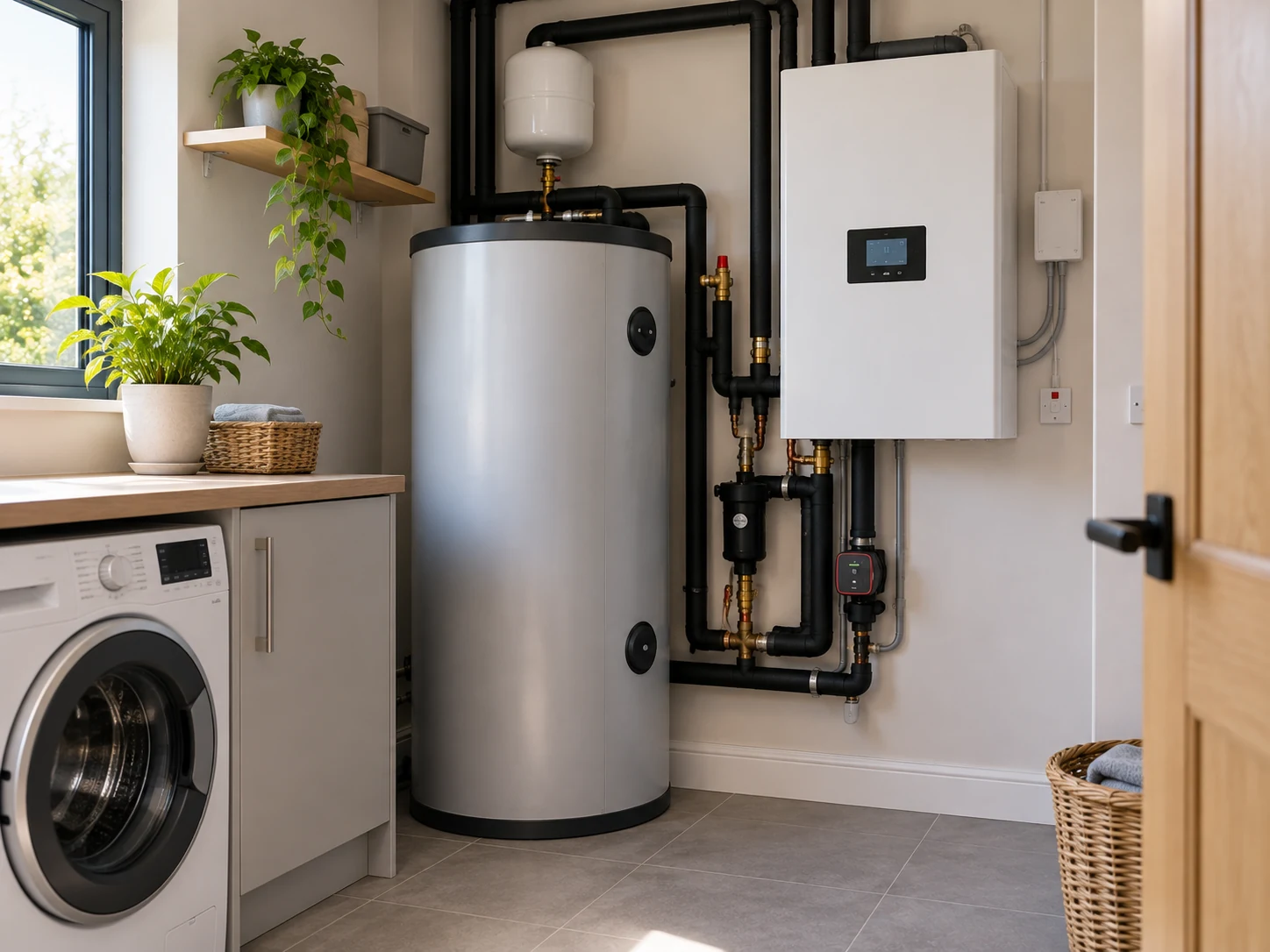
Indoor space for cylinders and equipment
A heat pump system usually needs more indoor space than a combi boiler. A hot water cylinder stores the water the heat pump heats, since most heat pumps do not produce hot water instantly on demand the way a combi boiler does.
Alongside the cylinder, expect a buffer or expansion vessel, controls and, depending on the system, an indoor unit. A home without an existing hot water cylinder, or with a small hot press, may need to find new space for this equipment, commonly in a utility room, attic or garage.
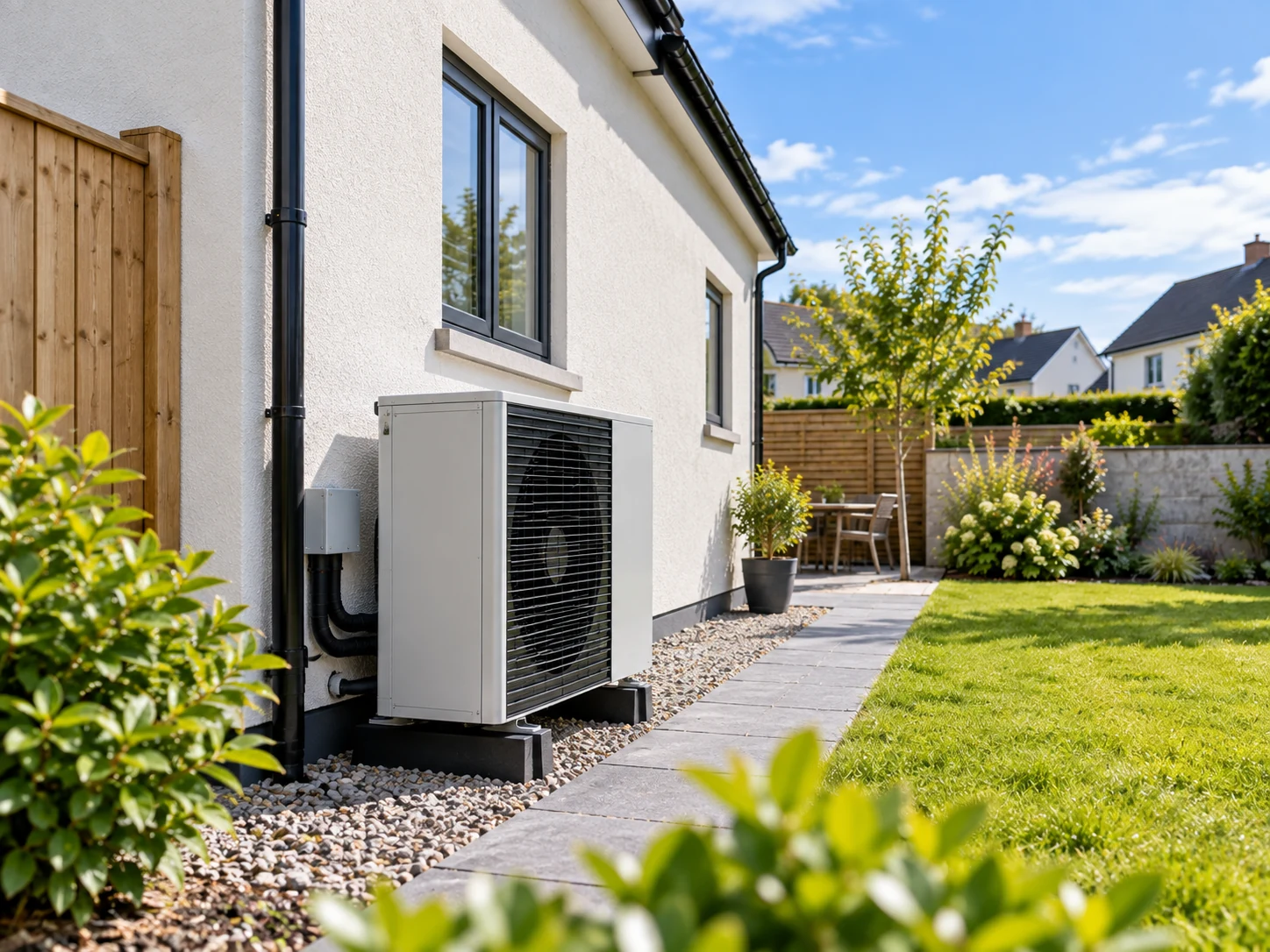
Positioning your outdoor unit
The outdoor unit needs a clear, ventilated spot outside the home, close to where indoor pipework can connect through an external wall, and clear of boundaries, gates and airflow obstructions.
Domestic heat pumps are generally exempted development in Ireland, so planning permission is not usually required, subject to current planning conditions. Protected structures, conservation areas or any doubt should be checked with your local planning authority first.
Noise is worth planning for even without a specific number to hand. Site the unit away from your own and any neighbouring bedroom windows, and ask your installer for the manufacturer's published sound rating for the model quoted.
Planning exemption conditions can change and can depend on your specific property. If you are in any doubt, confirm the current position with your local planning authority before installation.
When improving insulation first makes more sense
A heat pump is not always the first upgrade to make. Where a home has a Heat Loss Indicator well above the level needed to qualify for grant support, or where wall and attic insulation has never been upgraded, addressing the building's fabric first, or at the same time, often produces a better outcome than installing a heat pump onto a home that is still losing a lot of heat.
An SEAI registered Technical Advisor or BER assessor can tell you whether insulation upgrades would meaningfully improve your Heat Loss Indicator before you commit to a heat pump quotation.
The Heat Pump System Grant
The main financial support for a home heat pump in Ireland is the SEAI Heat Pump System Grant. Based on currently published SEAI guidance:
- Maximum support depends on dwelling type. For a house, support is worth up to €12,500, made up of three parts: €6,500 towards the heat pump itself, up to €2,000 towards radiators and pipework, and a €4,000 renewable heating bonus, paid where you are replacing an oil, gas, solid fuel or electric storage heating system. For an apartment, support for the main water based heat pump types is generally worth up to €9,500.
- Your home must have an MPRN and have been built and occupied before 2021. Eligibility is not limited to owner occupiers, and also extends to landlords, companies, charities, holiday homes and Approved Housing Bodies.
- Your Heat Loss Indicator must be 2.3 W per K per square metre or lower, confirmed by a valid BER or by an SEAI Technical Assessment. A grant of €200 is available towards the cost of a Technical Assessment.
- The installation must be carried out by a contractor registered with SEAI for the type of work being carried out.
- A Building Energy Rating assessment completed after the works, by a registered BER assessor, is required before the grant is paid. A grant of €50 is available towards this assessment.
Grant amounts, thresholds and conditions can change, and eligibility also depends on factors specific to your home and its history. Always confirm the current grant amount and your own eligibility directly with SEAI before assuming a grant applies to you.
Heat Pump Readiness Check
Answer a few practical questions about your home to get a personalised summary of what to check before requesting quotations. This is an educational starting point only. It does not determine whether your home is suitable for a heat pump.
What to check before and when comparing quotations
Two heat pump quotations that look similar on paper can involve very different levels of preparation. Before comparing prices, make sure you can answer the following for each quotation.
Upgrader.ie does not rank, rate or recommend individual installers. This checklist is here to help you ask the right questions and compare answers, not to tell you which company to choose.
What happens during installation, and what to expect
Every project varies, but most home heat pump installations in Ireland follow a broadly similar sequence, and understanding it helps you judge how much disruption to expect.
Quotes and Technical Assessment
Get quotes from more than one SEAI registered installer, and arrange a Technical Assessment if your home needs one to confirm your Heat Loss Indicator.
Grant application
Once you have chosen an installer and a system, a grant application is made to SEAI and confirmed before work begins.
Installation day or days
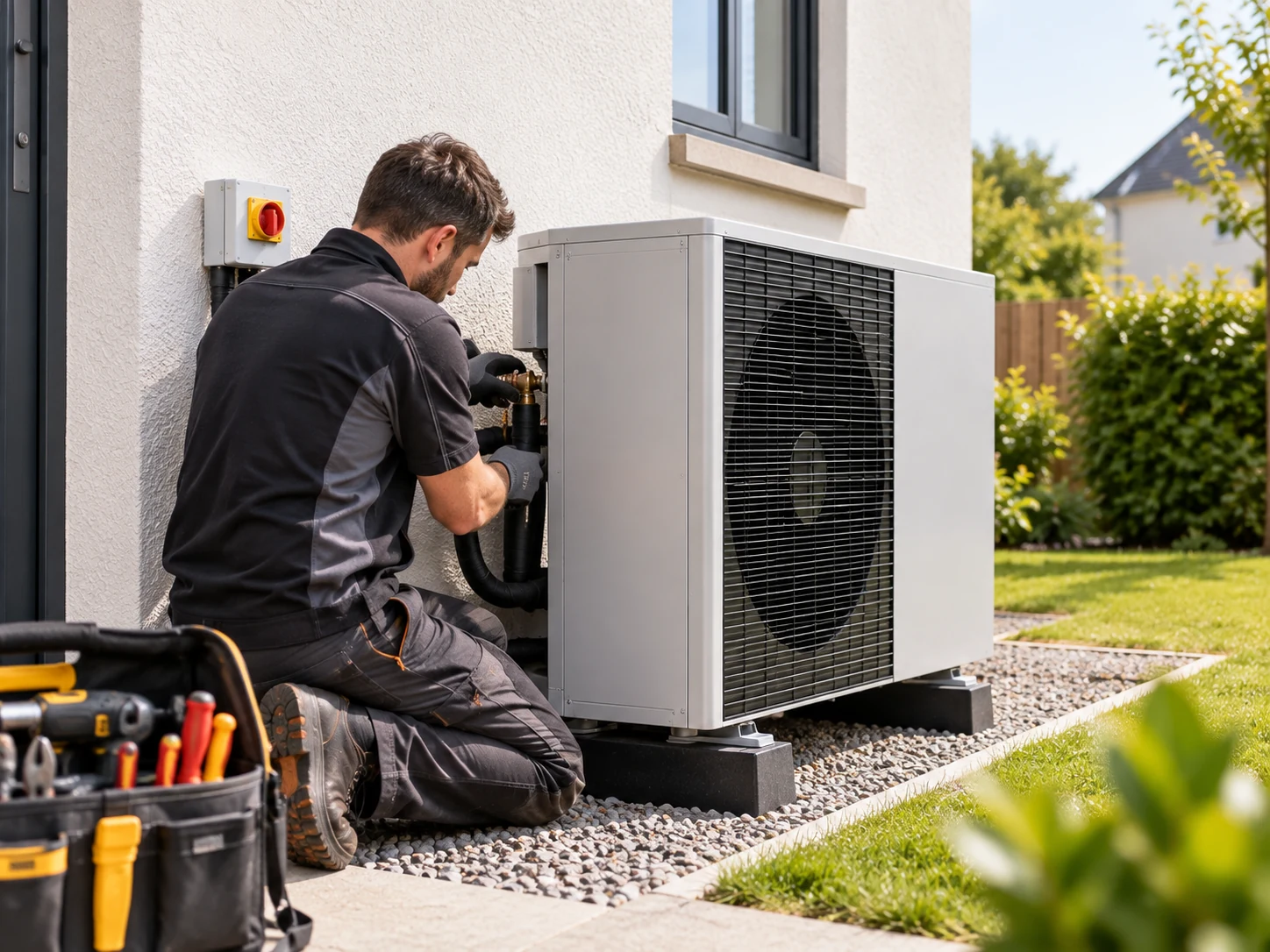
The outdoor unit, indoor equipment and hot water cylinder are fitted, with any radiator changes carried out alongside. This typically takes longer than a boiler swap, and your heating and hot water may be off for periods during the work.
Electrical work and commissioning
The system is wired in, commissioned and set up, including controls and any smart heating features.
Post works BER
A Building Energy Rating assessment is completed after the works and published, which is required before your grant is paid.
Settling in
Heat pumps often need controls adjusted over the first few weeks as you learn how the system responds, particularly compared with how a boiler behaved.
Frequently asked questions
Does my BER tell me if my home is ready for a heat pump?
Not on its own. Grant eligibility and a realistic picture of suitability depend on your Heat Loss Indicator, a specific measure of how much heat your home loses, rather than your BER letter alone. Two homes with a similar BER can have different Heat Loss Indicators. See Why heat loss matters more than your BER rating above.
Will I need to replace all my radiators?
Not necessarily. Heat pumps typically run at lower flow temperatures than a boiler, so some radiators sized for a boiler may need to be upsized, while others may already be adequate. A proper room by room heat loss calculation from your installer should confirm which, if any, need to change.
Do I need planning permission for a heat pump?
Domestic heat pumps are generally treated as exempted development in Ireland, subject to conditions in current planning regulations, so planning permission is not usually required. Protected structures, architectural conservation areas and any doubt about your own property should be checked with your local planning authority. See Positioning your outdoor unit above.
How much is the Heat Pump System Grant?
Based on current SEAI guidance, maximum support depends on dwelling type. For a house, support is worth up to €12,500, made up of €6,500 towards the heat pump itself, up to €2,000 towards radiators and pipework, and a €4,000 renewable heating bonus. For an apartment, support for the main water based heat pump types is generally worth up to €9,500. Always confirm the current amount and your own eligibility directly with SEAI.
Does Upgrader.ie install heat pumps?
No. Upgrader.ie is an independent information resource. We do not install heat pumps, and we do not currently have installer partnerships.
What the latest figures suggest
900+
Heat pumps installed in Ireland by the end of March 2026, up 18 percent year on year
Department of Climate, Energy and the Environment, 21 April 2026
Installation numbers are still small, but growing
Heat pump installations remain well behind solar PV in volume, but the year on year growth shows steady momentum. With grant support recently increased and a defined Heat Loss Indicator threshold now central to eligibility, the practical groundwork covered on this page, confirming your Heat Loss Indicator, understanding what happens to your radiators, and checking outdoor unit positioning, is becoming relevant to a wider group of homeowners in Ireland.
Ready to talk to installers?
If you feel informed enough to take the next step, you can search for heat pump installers in Ireland and contact the ones that interest you directly.
- Browse installers by upgrade type and county
- Review company details before you get in touch
- Contact installers directly, with no obligation and no middleman
Upgrader.ie is an independent information resource. We do not currently have installer partnerships, and listing a company does not imply endorsement or vetting. See our Provider & Partnership Disclosure.