
Can You Replace Failed Double Glazing Without Replacing the Window
If you already know that moisture between your panes points to a failed sealed unit, the next question is whether the glass can be replaced on its own. Here is what that actually depends on.
A failed glazing unit does not always mean a new window
Our main guide to Windows and Doors already explains that moisture appearing between the panes of a double glazed window usually points to a failed sealed unit, and that this is a different problem from condensation on the room facing surface of the glass. This article picks up from that point and works through what each of the available options actually involves.
What a sealed unit actually is
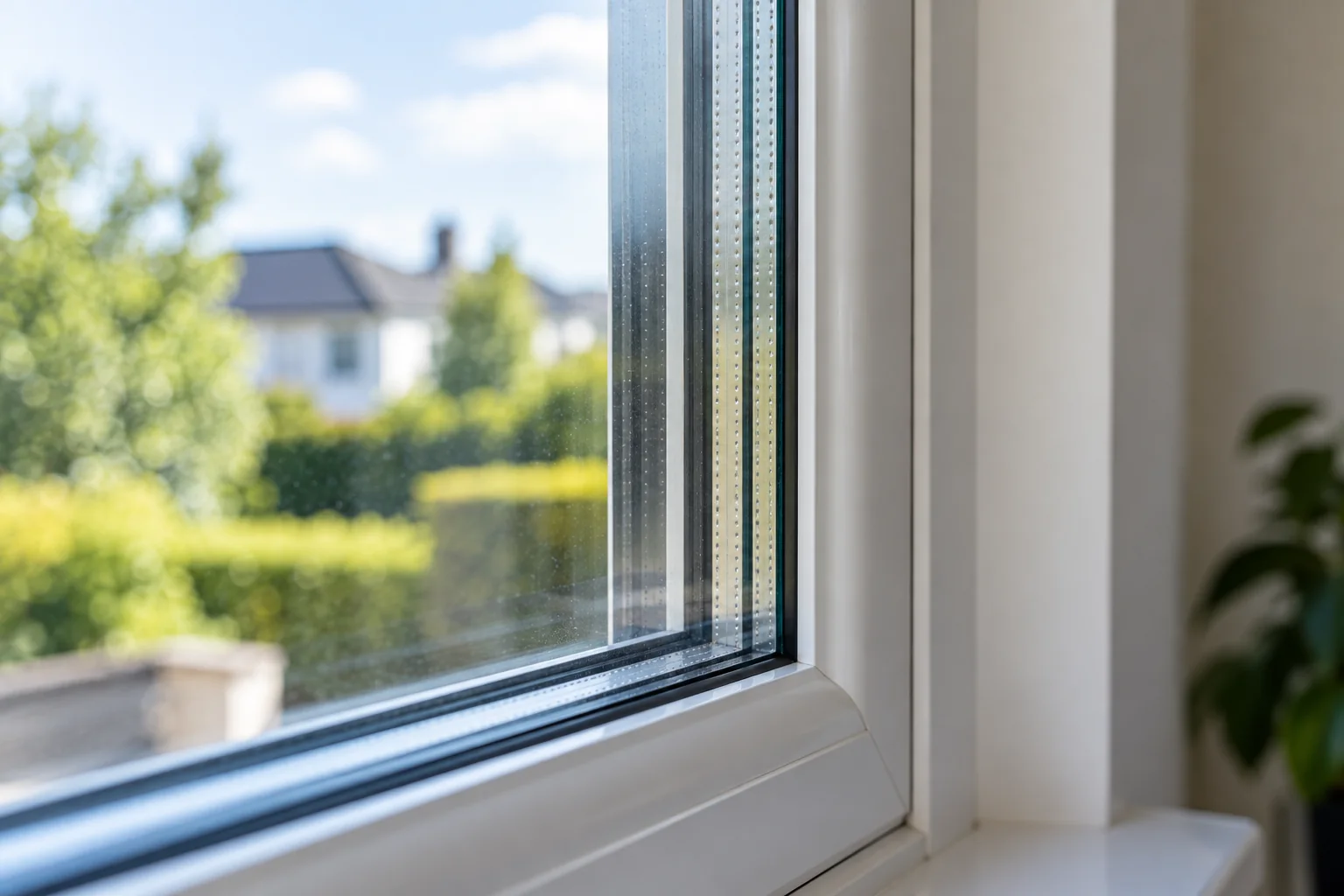
The sealed glazing unit is the glass assembly itself, made up of two or more panes of glass separated by a spacer bar and sealed around the edge, with the gap between the panes filled with air or an inert gas. The frame, the part that holds the glazing unit in place and connects to the wall, is a separate component. A failed seal allows moisture laden air to get into the gap between the panes, which shows up as persistent misting or visible moisture between the panes, since that gap is no longer sealed from the outside air.
When unit only replacement is possible
In many cases, the sealed unit can be removed from the existing frame and replaced with a new one, without replacing the frame itself. Whether this is actually possible in your case depends on several things a glazier needs to assess directly, including the specific system the frame uses to hold the glazing in place, whether that system allows the beading to be removed and refitted cleanly, the frame's own condition, since a sound unit fitted into a deteriorating frame does not solve the underlying problem, and whether a replacement unit can be manufactured to the same size and specification as the original, which is usually possible for a standard size but can be more involved for an unusual or older frame system.
What changes if the frame itself is outdated
Even where a unit only replacement is mechanically possible, it is worth checking what performance the new unit will actually deliver once fitted into the existing frame. Building Regulations and the SEAI Windows grant, described in full on our main guide, are based on the whole window figure, covering the glazing, frame and spacer together, not the glazing performance on its own. Fitting a modern, better performing sealed unit into an older frame can improve the overall result, but the frame itself remains the original one, with its own age, seals and thermal performance, so the improvement is limited by what the existing frame can support. This is a reasonable, often cost effective fix for a single failed unit in an otherwise sound window, but it is not equivalent to a full window replacement in terms of overall performance. If you are weighing this fix against full replacement quotations, our guide to comparing window U values between quotations covers how to read the whole window figure a full replacement would be quoted at.
Questions to ask a glazier about a failed unit
- Can a replacement sealed unit be manufactured to fit the existing frame and beading system
- Is the frame itself in sound condition, or does it show signs of decay, warping or damage that would undermine a new unit
- What specification is being proposed for the replacement unit, including the type of gas fill and spacer, where relevant
- How does the expected performance of the repaired window compare with a full replacement, in general terms
- Is there a warranty on the replacement unit itself, separate from any warranty on the original window
Where a glazier's assessment points to full window replacement instead, whether because of frame condition or because performance improvement matters more than the cost of a unit only fix, our guide to Windows and Doors performance and grants covers whole window U values, frame materials, installation quality and current SEAI grant support in full.