
Air to Water, Air to Air and Ground Source Heat Pumps Explained
When people in Ireland discuss a heat pump retrofit, they are almost always describing one specific type. This article clarifies which one, and where the other types actually fit.
The three systems do different jobs
Our main guide to Heat Pumps covers suitability, the Heat Loss Indicator, radiators, positioning and grants in detail, all written around one specific type of heat pump. This article steps back to clarify which type that is, and how it differs from the other systems also called heat pumps.
What people in Ireland usually mean
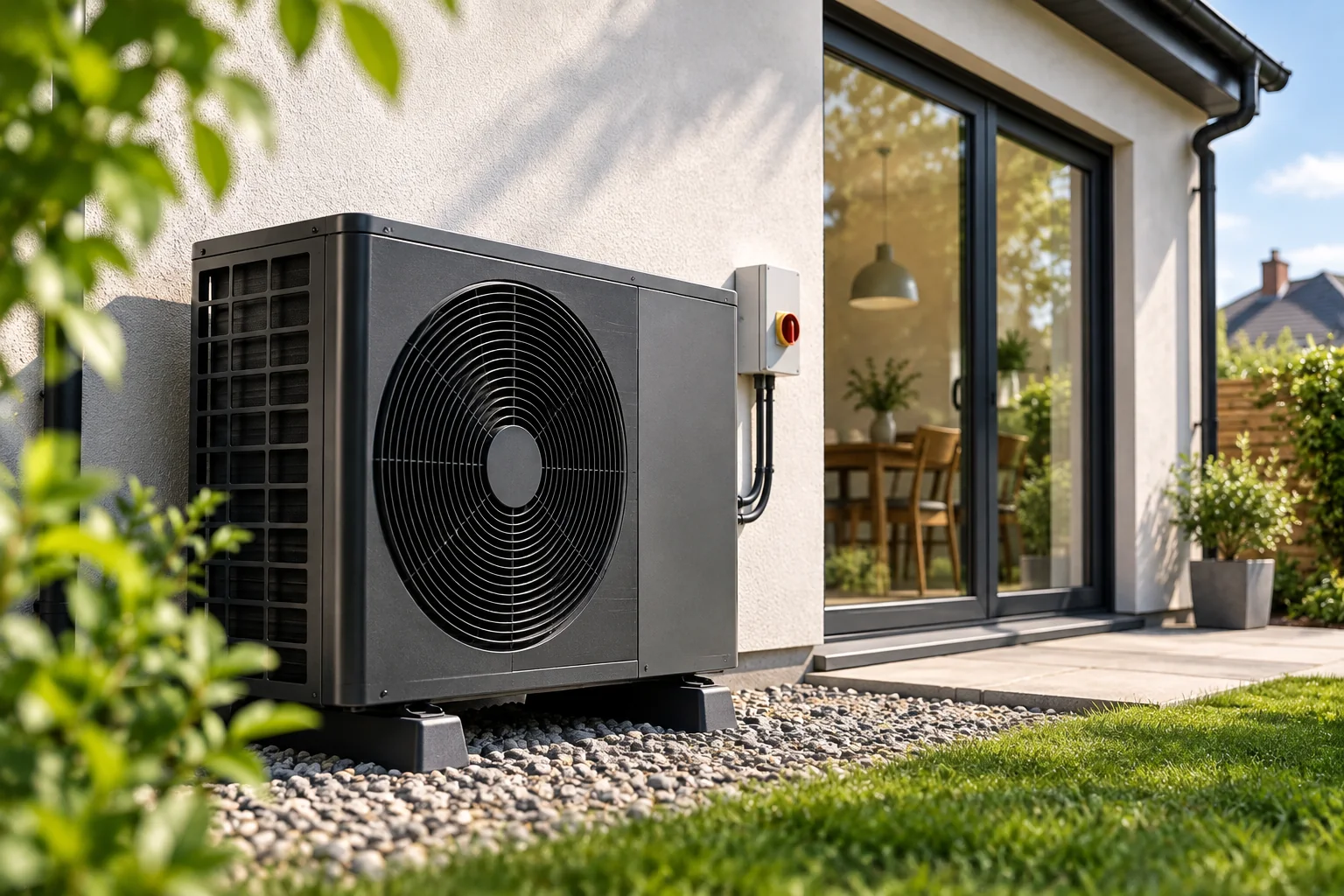
When homeowners, installers and SEAI guidance in Ireland discuss a domestic heat pump retrofit, they are almost always describing an air to water heat pump. This is a system that extracts heat from the outside air using an outdoor unit, and uses that heat to warm water, which is then circulated through the home's existing or upgraded radiators or underfloor heating, and stored in a hot water cylinder for washing and bathing. This is the system our main guide describes throughout, including its coverage of the Heat Loss Indicator, radiators and grant support. Because it heats water rather than air, an air to water system is also the type our guide to checking whether radiators need upsizing applies to, since that question does not arise for an air to air system at all.
Air to air systems are a different product
An air to air system also extracts heat from the outside air, but instead of heating water, it heats air directly and distributes that warm air through indoor wall units, in much the same way as an air conditioning unit run in reverse. It does not heat water for radiators or a hot water cylinder at all.
This is a meaningful practical difference, not a minor technical distinction. An air to air system generally cannot replace a boiler as a whole home heating and hot water solution in the way an air to water system can, and current SEAI Heat Pump System Grant support is built around air to water systems and the Heat Loss Indicator assessment described on our main guide. Anyone comparing quotations should confirm explicitly which type of system is actually being proposed, since the terms are sometimes used loosely in general conversation.
Ground source systems
A ground source heat pump extracts heat from the ground rather than the outside air, using a loop of pipework either buried horizontally across a large area of garden or sunk vertically in a borehole. Ground temperatures stay more stable across the year than air temperatures, which can support efficient operation, but the ground works involved add substantial cost and disruption compared with an air source installation, and enough outdoor space or access for a borehole rig is a genuine practical constraint. Ground source systems are installed in Ireland, but they are considerably less common in a typical home retrofit than air to water systems, largely because of this cost and space requirement.
| Type | Heat source | What it heats | Typical role in a home in Ireland |
|---|---|---|---|
| Air to water | Outside air | Water, for radiators, underfloor heating and a hot water cylinder | The usual subject of a whole home heating retrofit, and the system our main Heat Pumps guide describes |
| Air to air | Outside air | Air, distributed by indoor wall units | Space heating, and sometimes cooling, for specific rooms rather than a full central heating and hot water replacement |
| Ground source | The ground, via buried or borehole pipework | Water, for radiators, underfloor heating and a hot water cylinder | Less common in retrofit due to ground works cost and space needs, though it serves a similar role to air to water once installed |
For suitability, the Heat Loss Indicator, what happens to your radiators, outdoor unit positioning and current grant support for an air to water system, see our guide to Heat Pumps suitability and grants.