
Insulating a Solid Wall Home in Ireland
A solid wall home is not automatically a traditional or heritage building, and a traditional home is not automatically excluded from support. The two get confused often enough that they are worth separating clearly before you plan any wall insulation work.
First establish what the wall is actually made from
Our main guide to Home Insulation already flags that traditional or heritage buildings are treated differently from the standard individual wall insulation grants. This article goes into what that actually means in practice, since not every solid wall home falls into that category, and assuming either way without checking can lead to the wrong approach.
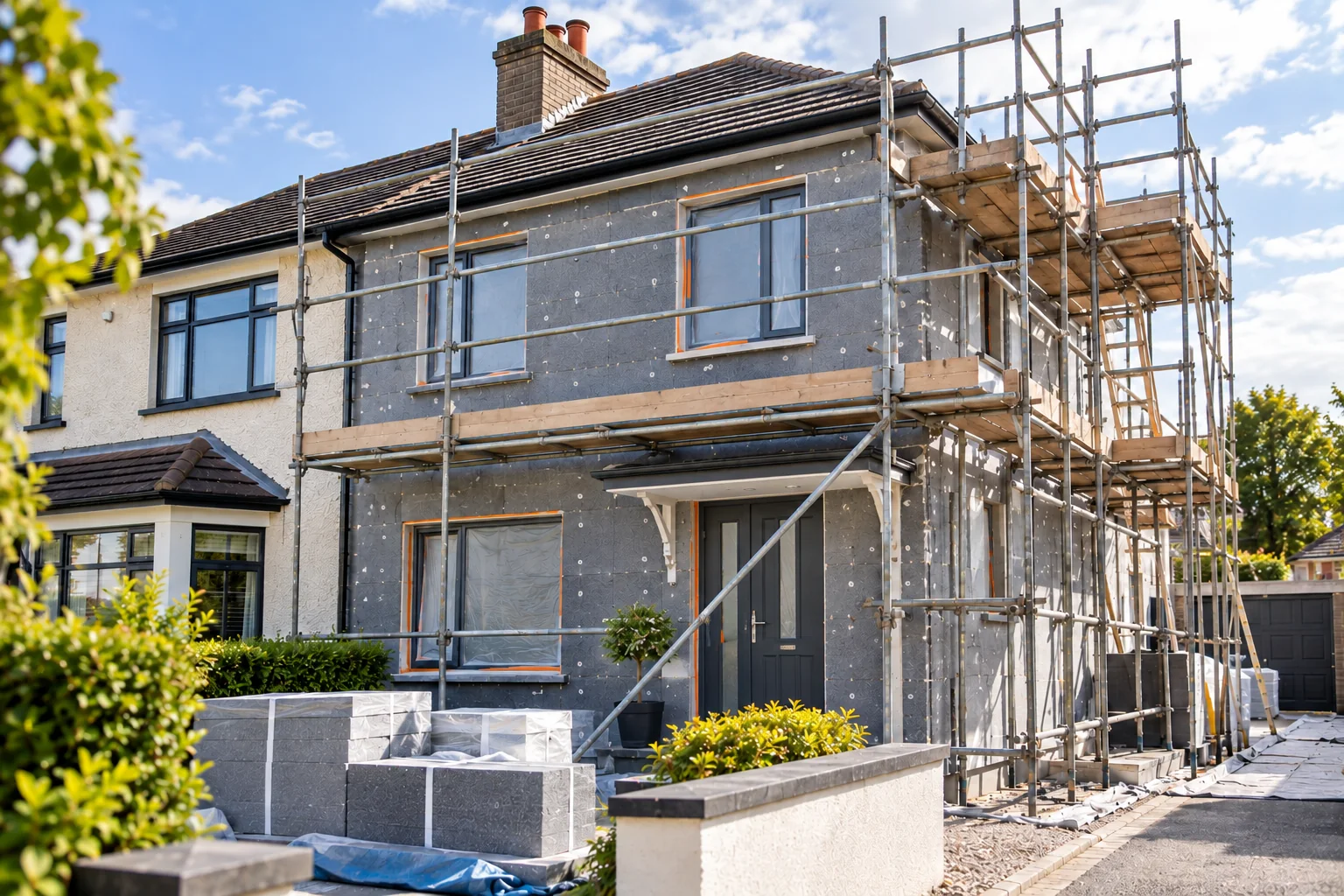
Solid wall does not automatically mean traditional or heritage
A solid wall simply means a wall built without a cavity, most commonly solid brick or solid block or stone, as opposed to a cavity wall built from two separate leaves with a gap between them. Solid wall construction was used across a wide range of build periods in Ireland, including many ordinary twentieth century homes that are not old enough or built in a way that would be considered traditional or heritage construction.
Current SEAI guidance treats a genuinely traditional or heritage building as a distinct category, generally describing this as a home built before 1940 using solid masonry with breathable construction, where the materials and building method are meaningfully different from a modern solid wall build. A solid wall home built well after this period, using modern blockwork or brick and modern mortar and finishes, is not automatically a traditional or heritage building just because it lacks a cavity, and it may still be able to use the standard individual internal or external wall insulation grants described on our main guide, subject to the usual eligibility conditions there. Confirming which category your home actually falls into, rather than assuming from age or wall type alone, is worth doing with an SEAI registered contractor or a BER assessor before planning any work.
Why breathability matters for genuinely traditional construction
Traditional solid masonry buildings were generally built to allow moisture to pass through the wall and evaporate, rather than being sealed against it, using lime based mortars and finishes rather than modern cement based ones. Insulating this kind of wall with modern, largely vapour sealed materials and finishes can trap moisture within the wall instead of letting it dissipate, which can lead to damp and decay problems over time, sometimes appearing well after the work is finished rather than immediately. This is the reasoning behind treating traditional and heritage buildings as a distinct category requiring different materials and methods from a standard modern wall insulation job, rather than an arbitrary exclusion.
The Traditional Homes Pilot route
For homes that genuinely fall into the traditional or heritage category, SEAI guidance directs wall insulation support through the Traditional Homes Pilot rather than the standard individual wall insulation grant. Based on current SEAI guidance, this pilot is delivered as part of a whole home energy upgrade through a registered One Stop Shop, rather than as a standalone wall insulation measure, and involves a Traditional Building Professional overseeing the works to protect the building's breathable construction. This is a meaningfully different process from applying for a standard individual wall insulation grant, not simply the same grant under a different name. Because scheme details, eligibility and available support can change, always confirm the current position directly with SEAI before assuming a particular route applies to your home, rather than relying on a general description.
Questions to establish before planning wall insulation on a solid wall home
- Is the wall solid or cavity, confirmed rather than assumed from appearance alone
- Roughly when was the home built, and does that place it before or after the traditional or heritage cut off period SEAI currently describes
- Is the wall built with lime based mortars and finishes, consistent with breathable traditional construction, or modern cement based materials
- Has a BER assessor or SEAI registered contractor confirmed which category the property falls into
- If the home is traditional or heritage, has the current position on the Traditional Homes Pilot been confirmed directly with SEAI
For the standard internal, external and cavity wall insulation options, current grant amounts and how disruption, appearance and planning differ between internal and external approaches, see our guide to Home Insulation wall options and grants and our article on choosing between internal and external wall insulation.